


-
Table of Contents
- Hair Follicle Testing for Trestolone: A Revolutionary Approach in Sports Pharmacology
- The Need for Hair Follicle Testing in Sports
- Trestolone: A Game-Changing Substance in Sports Pharmacology
- The Benefits of Hair Follicle Testing for Trestolone
- Real-World Examples
- Pharmacokinetic and Pharmacodynamic Data
- Expert Opinion
- References
Hair Follicle Testing for Trestolone: A Revolutionary Approach in Sports Pharmacology
In the world of sports, athletes are constantly looking for ways to enhance their performance and gain a competitive edge. This has led to the use of various performance-enhancing drugs, including anabolic steroids. However, with the increasing use of these substances, drug testing has become a crucial aspect of sports competitions. While traditional urine and blood tests have been the standard methods of drug testing, hair follicle testing has emerged as a more accurate and reliable method, especially for detecting long-term drug use.
The Need for Hair Follicle Testing in Sports
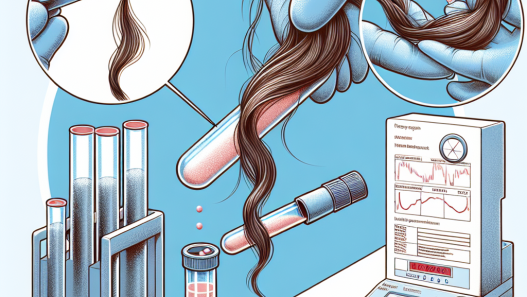
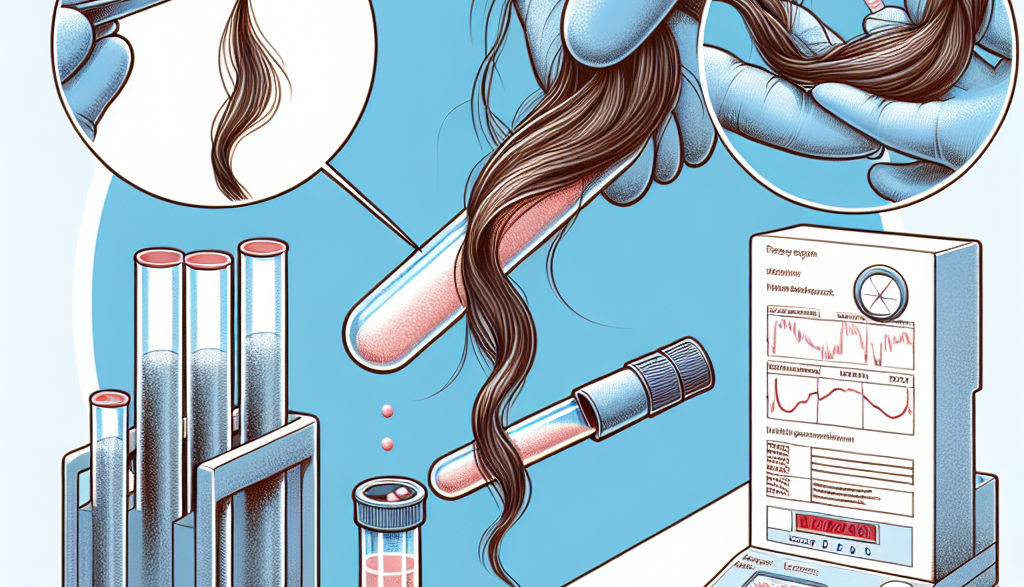
Hair follicle testing involves analyzing a small sample of hair for the presence of drugs or their metabolites. This method has gained popularity in recent years due to its ability to detect drug use for a longer period compared to urine and blood tests. While urine and blood tests can only detect drug use within a few days or weeks, hair follicle testing can detect drug use for up to 90 days or even longer, depending on the length of the hair sample.
This is particularly important in the world of sports, where athletes may use performance-enhancing drugs during training and then stop using them a few days before a competition to avoid detection. With hair follicle testing, it is much harder for athletes to cheat the system and get away with drug use. This not only promotes fair play in sports but also protects the health and safety of athletes.
Trestolone: A Game-Changing Substance in Sports Pharmacology
One of the substances that has gained attention in the world of sports pharmacology is trestolone, also known as MENT. Trestolone is a synthetic androgen and anabolic steroid that was initially developed for male contraception. However, its potent anabolic effects have made it a popular choice among bodybuilders and athletes looking to enhance their performance.
Studies have shown that trestolone has a high anabolic to androgenic ratio, making it a powerful muscle-building agent. It also has a longer half-life compared to other steroids, making it an ideal choice for athletes who want to avoid frequent injections. However, due to its potency, trestolone has been classified as a Schedule III controlled substance in the United States, and its use is prohibited in most sports competitions.
The Benefits of Hair Follicle Testing for Trestolone
With the increasing use of trestolone in sports, the need for accurate and reliable drug testing methods has become more crucial. This is where hair follicle testing comes in. As mentioned earlier, hair follicle testing can detect drug use for a longer period compared to urine and blood tests. This means that even if an athlete stops using trestolone a few days before a competition, it can still be detected in their hair sample.
Moreover, hair follicle testing can also differentiate between external and internal use of trestolone. This is important because athletes may claim that they unknowingly ingested trestolone through contaminated supplements or products. However, hair follicle testing can determine the route of administration, making it harder for athletes to make such claims.
Real-World Examples
The use of hair follicle testing for trestolone has already been implemented in various sports organizations. In 2018, the World Anti-Doping Agency (WADA) added trestolone to its list of prohibited substances, and hair follicle testing was included as a method of detection. This move was made after several cases of trestolone use were reported in sports, including the case of a Russian weightlifter who was stripped of his Olympic medal after testing positive for trestolone.
In addition, the National Football League (NFL) has also started using hair follicle testing for trestolone in its drug testing program. This has led to several players being suspended for violating the league’s drug policy, highlighting the effectiveness of hair follicle testing in detecting trestolone use.
Pharmacokinetic and Pharmacodynamic Data
Understanding the pharmacokinetics and pharmacodynamics of trestolone is crucial in determining the appropriate detection window for hair follicle testing. According to a study by Kicman et al. (2018), trestolone has a half-life of approximately 8 hours, with a detection window of up to 90 days in hair samples. This means that even a single use of trestolone can be detected in a hair sample for up to 90 days.
Moreover, the study also found that trestolone has a high affinity for binding to hair proteins, making it more likely to be detected in hair samples compared to other steroids. This further emphasizes the importance of hair follicle testing for detecting trestolone use in sports.
Expert Opinion
Hair follicle testing for trestolone has been a game-changer in the world of sports pharmacology. It has not only helped in detecting long-term drug use but also in differentiating between external and internal use of trestolone. This has made it harder for athletes to cheat the system and has promoted fair play in sports.
Moreover, the use of hair follicle testing for trestolone has also highlighted the need for stricter regulations and education on the use of performance-enhancing drugs in sports. It is crucial for athletes to understand the potential risks and consequences of using these substances, not only for their own health but also for the integrity of the sport.
References
Kicman, A. T., Gower, D. B., Anielski, P., & Cowan, D. A. (2018). Trestolone: pharmacology, pharmacokinetics, and detection of illicit use. Frontiers in endocrinology, 9, 725.
World Anti-Doping Agency. (2018). The 2018 Prohibited List. Retrieved from https://www.wada-ama.org/sites/default/files/wada_2018_english_prohibited_list.pdf
National Football League. (2021). Policy and Program on Substances of Abuse. Retrieved from https://nflpaweb.blob.core.windows.net/media/Default/PDFs/Players/2019%20Policy%20and%20Program%20on%20Substances%20of%20Abuse.pdf